
Beyond the Surface: What Environmental Protection Looks Like at Industrial Scale
1 June 2025 · MarineStream
Three years ago, if you had told me I would be standing in the pouring rain on a wharf surrounded by ROV technicians and commercial divers, I would have laughed. I grew up in a small Canadian town where the list of possible careers felt short. The maritime industry was not on it, and subsea robotics certainly was not.
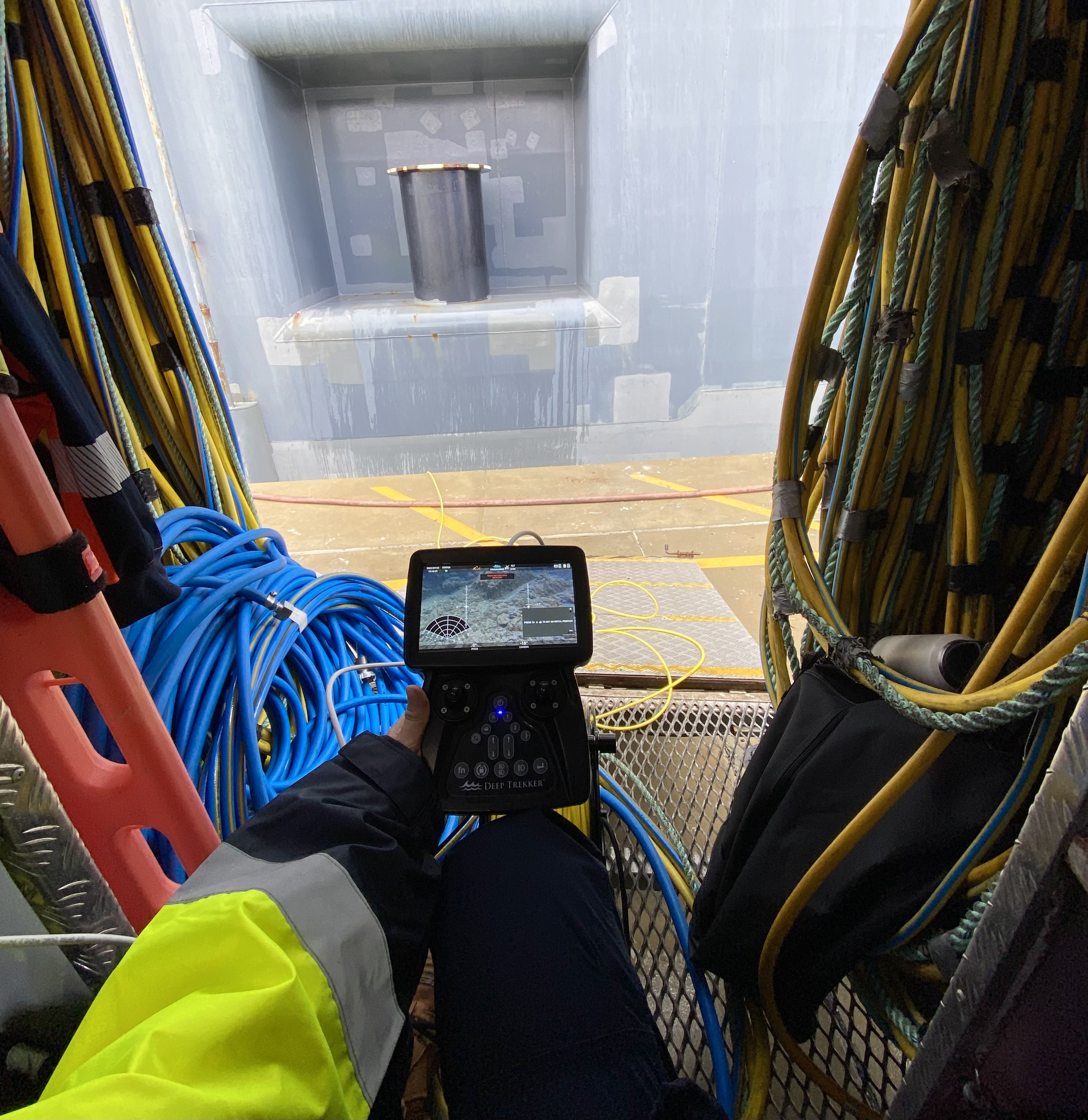 My first day supporting ROV operations, in weather that did not care about it.
But there I was, on my first day supporting ROV operations for a biofouling job, watching something I had spent years caring about from a completely different angle.
Where it started
I was working in Tobermory, Ontario, a small town on the Great Lakes that happens to be one of the best shipwreck diving spots in Canada. Managing recreational dive operations there put me in front of people from every corner of the industry: search-and-rescue tech divers, aerospace engineers, commercial divers from niche specialities I had never heard of. The only thing they had in common was that they all dived.
We supported:
- TV productions
- Canadian military combat dive training
- Hyperbaric medicine research
- Marine science expeditions
Every one of those jobs taught me something about what is possible underwater.
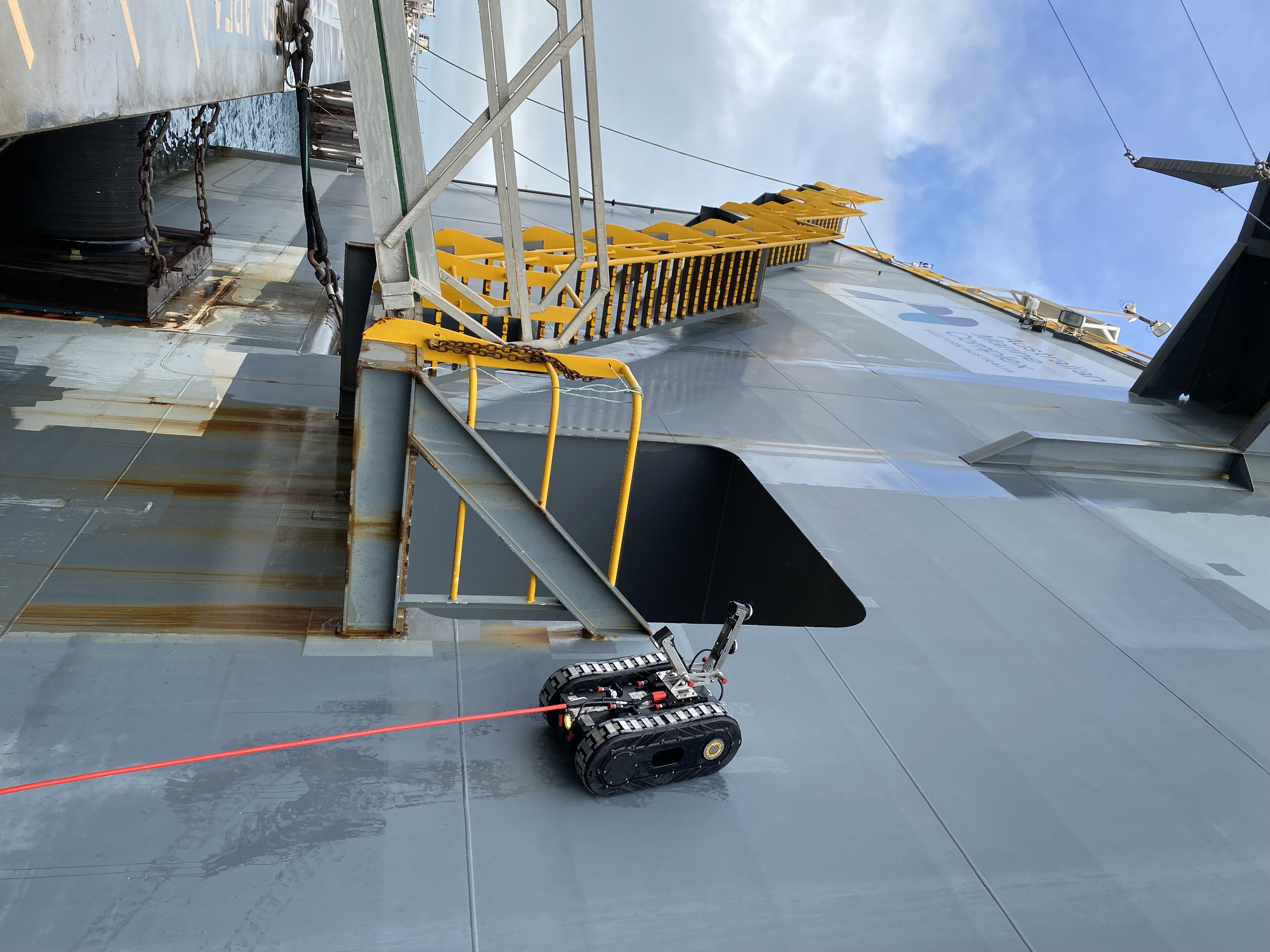 ROV equipment on deck.
What actually changed my direction was getting hands on Deep Trekker ROV technology for the first time. It was the first piece of kit I had used where the safety and environmental case were built into the design rather than bolted on afterwards. I wanted to work on that.
So I moved to Perth, Western Australia, one of the largest subsea technology hubs in the world, and started knocking on doors. Pivoting into a technical industry from outside it is not easy. When Franmarine called and offered me a chance to work on MarineStream and help clients with ROV solutions, I did not quite believe it.
What scale actually looks like
That first wet day on site is the one I keep coming back to. Everyone around me was just doing their job. I was standing there working out that I had badly underestimated what environmental protection involves.
I care about the ocean, and I had always tried to act like it: beach cleanups, ocean cleanups, sensible choices where I could make them. Standing on that wharf, I realised how small a slice of the problem I had been looking at.
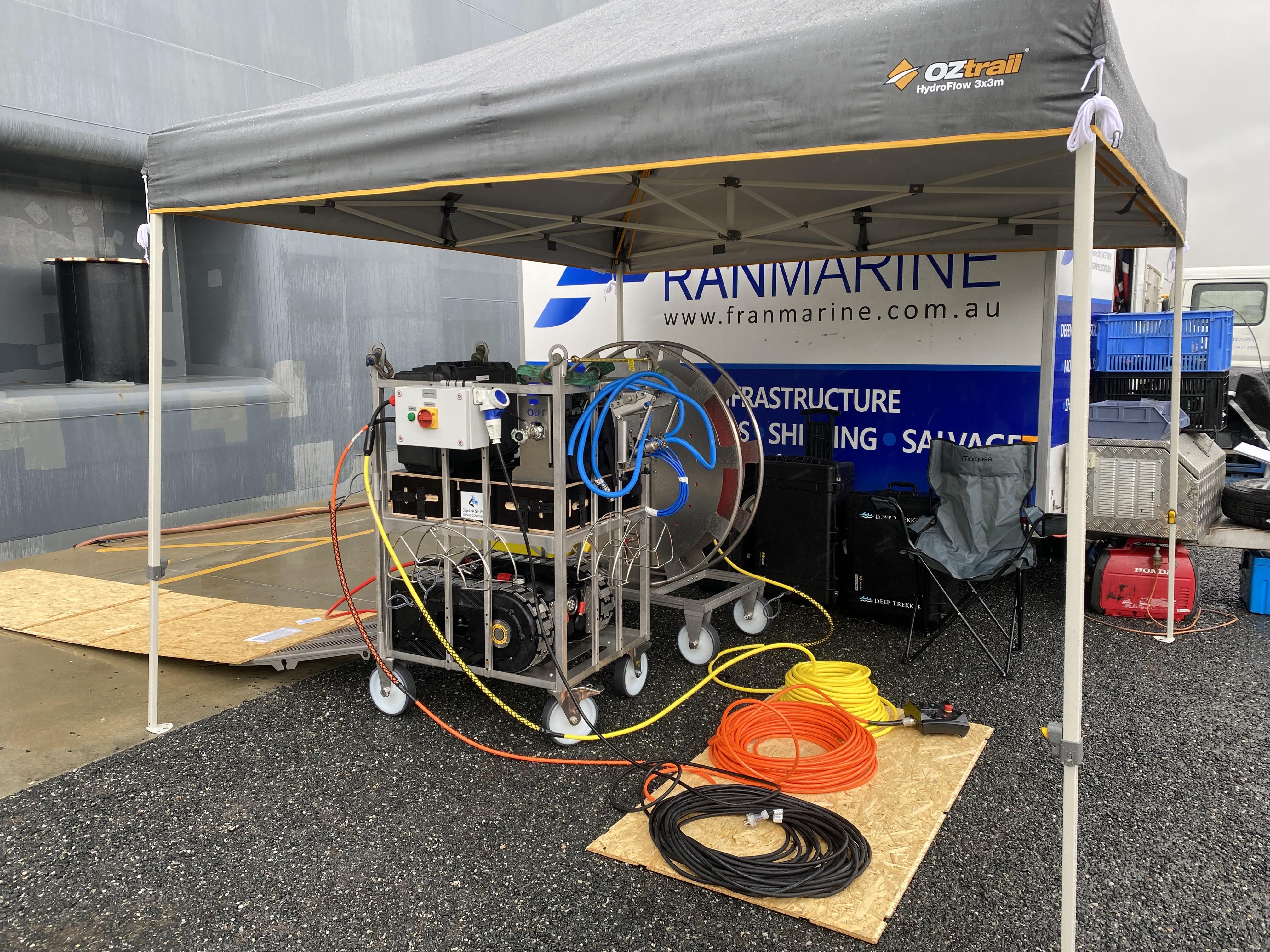 Industrial-scale environmental work, on an ordinary working day.
That evening I looked at things in my flat differently. The food that had crossed an ocean to get there. The parcels shipped from ports I will never see. All of it depends on vessels moving between ecosystems, and on somebody making sure they do not carry those ecosystems with them.
The biofouling removal I had watched that day was not cleaning. It was stopping an organism from establishing somewhere it could do real damage.
What it actually takes
Most people never get to see this work, so I want to be specific about what I learned.
Technology does not solve it on its own. The kit is good, and it makes the job safer and more efficient. But the machine does not decide anything. Everything that mattered on that job came down to experienced people making calls about what they were seeing.
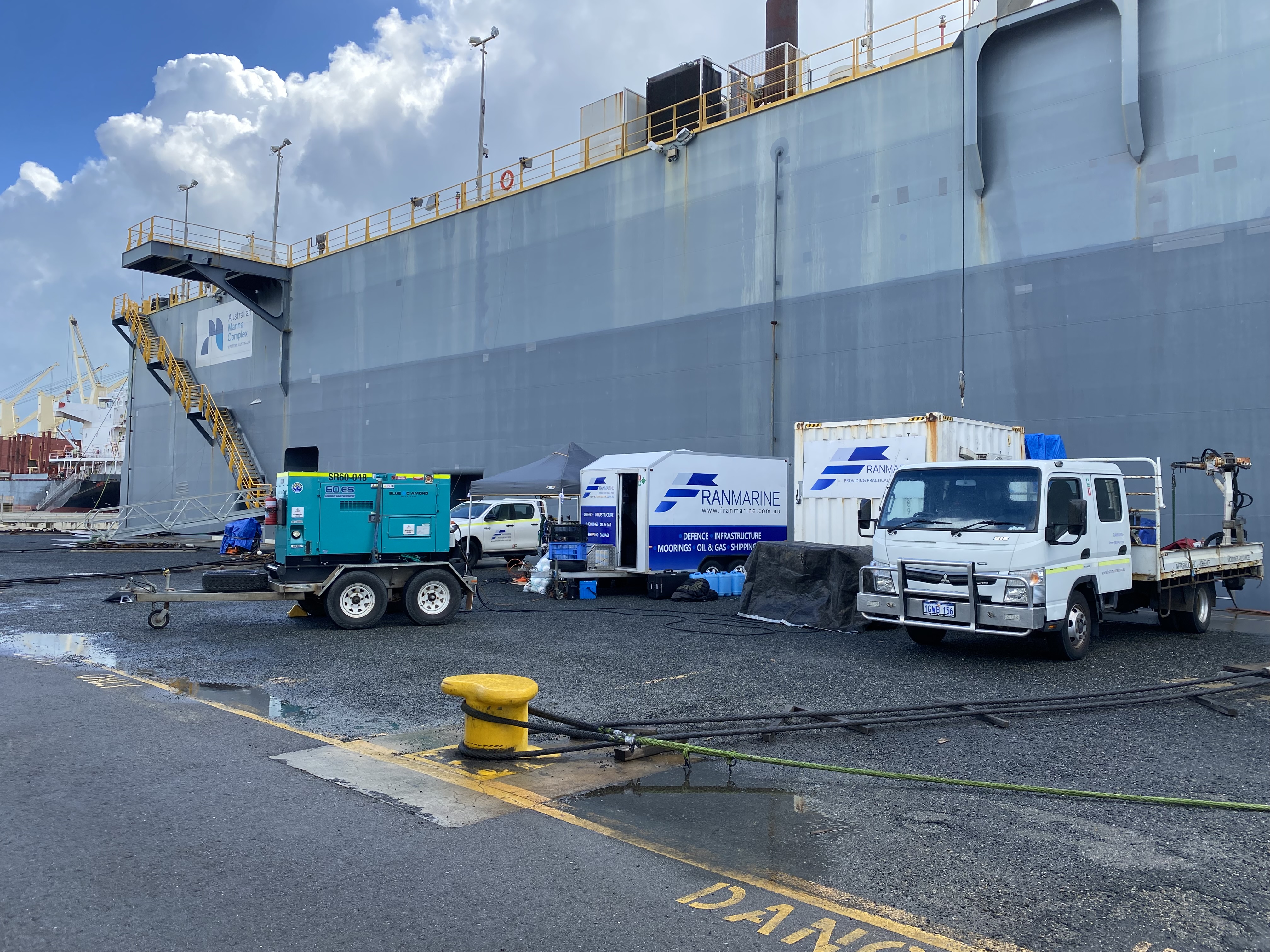 The crew is what makes the equipment useful.
The work itself is unglamorous and preventive:
- Hull inspections and biofouling removal stop invasive species spreading before they establish
- In-water asset management catches infrastructure degradation early
- Proactive maintenance avoids pollution and chemical leaching rather than cleaning it up
- Ecosystem protection keeps coastal and subsea environments intact
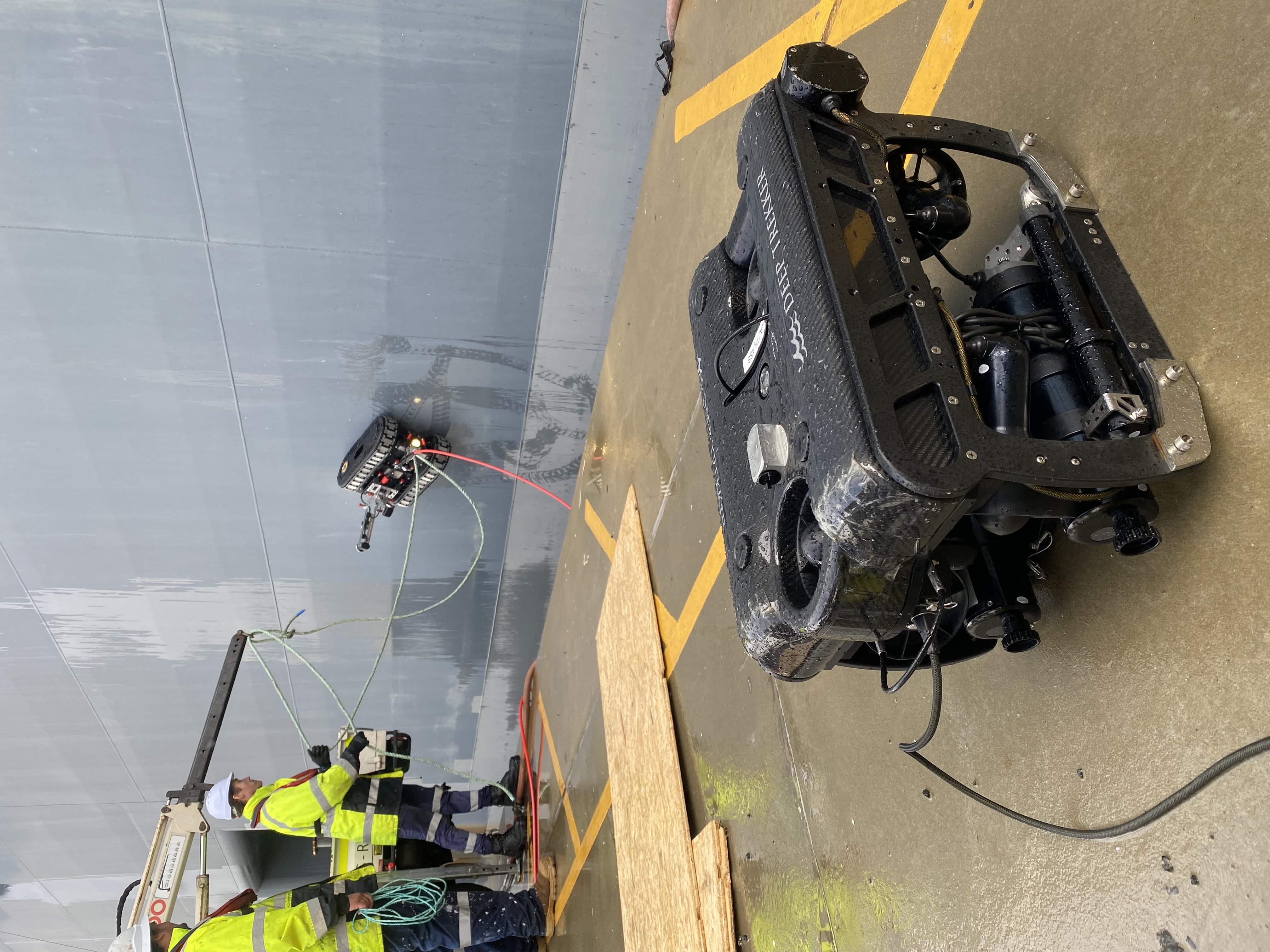 Precise equipment and repeatable method are most of the job.
From offshore wind to shipping lanes, none of this is a bolt-on sustainability program. Companies like Franmarine and MarineStream engineer it into how the job runs, and push their partners to work the same way.
The part nobody sees
Next time you eat produce from another continent, take delivery of an international parcel, or use power from an offshore wind farm, there is an industry underneath it making sure the ocean does not pay for it.
Beach cleanups and reusable straws matter. They are also not the whole picture. Most of the work happens at depths and scales none of us will see, run by people who treat it as a normal Tuesday.
For those of us who get to work with subsea technology, that access comes with an obligation to look after what we can reach.
More from the news
From ROV Controls to a Remote Job in Sydney: Nine Months at MarineStream
Nine months from no practical experience to flying ROVs, running filtration systems and joining an inspection in Sydney from a desk in Perth.
The Preventive Advantage: Biofouling Management in a Warming Ocean
Warmer water is accelerating fouling and corrosion, which makes fixed maintenance intervals a bad bet.