
From ROV Controls to a Remote Job in Sydney: Nine Months at MarineStream
4 September 2025 · MarineStream
I grew up in Perth, mostly on or near the water. Boating, exploring the coast, watching what lived in it. That turned into an interest in marine systems and, for a while, a detour into Marine Biology studies. What I did not have was any practical experience.
Nine months ago I joined Franmarine and MarineStream with plenty of enthusiasm and very little else. I had just finished a Defence Industry Pathways Program traineeship, which was the first thing that showed me what a career in this sector could actually look like, and made me want to take every opportunity going.
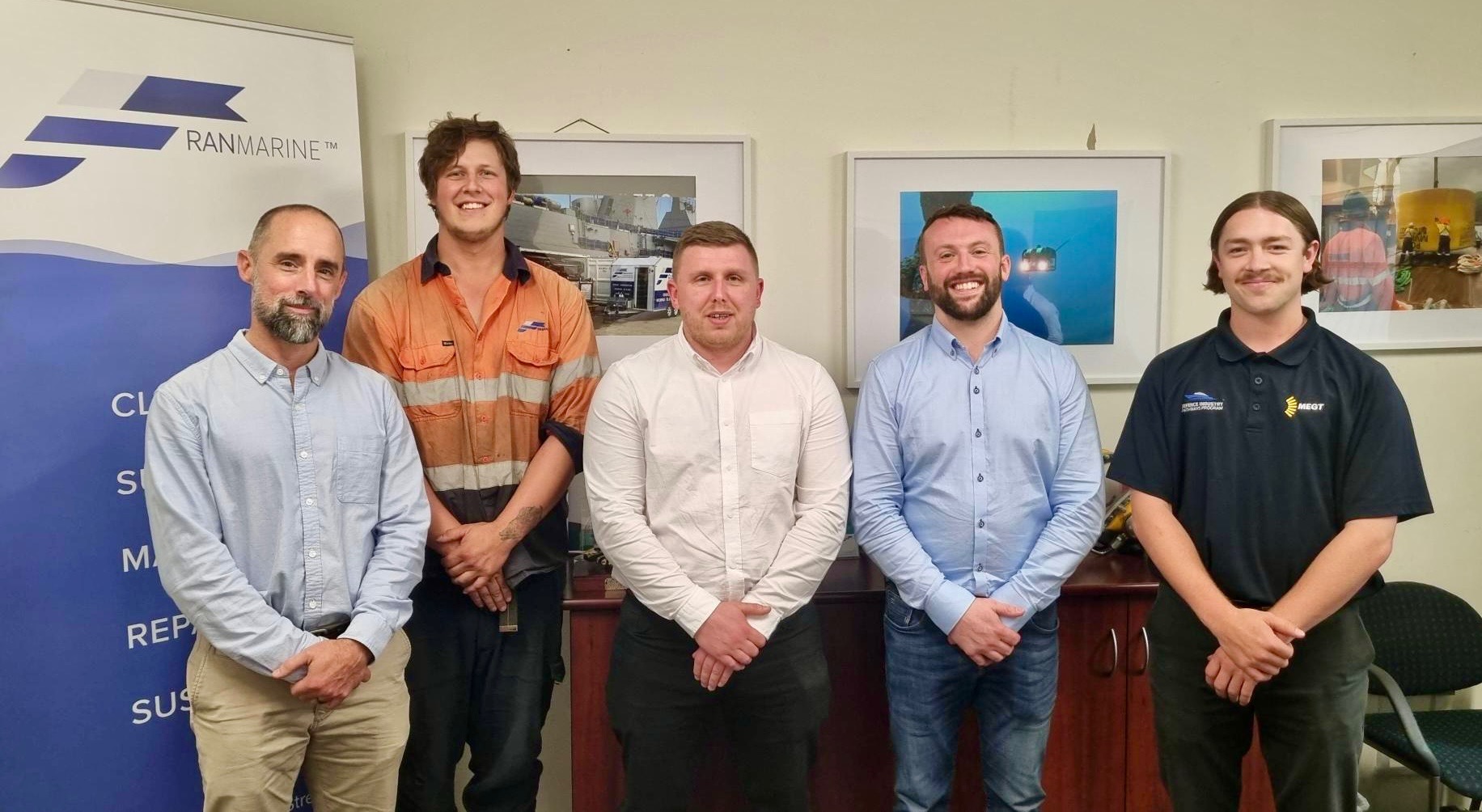 Learning MarineStream during my first few weeks.
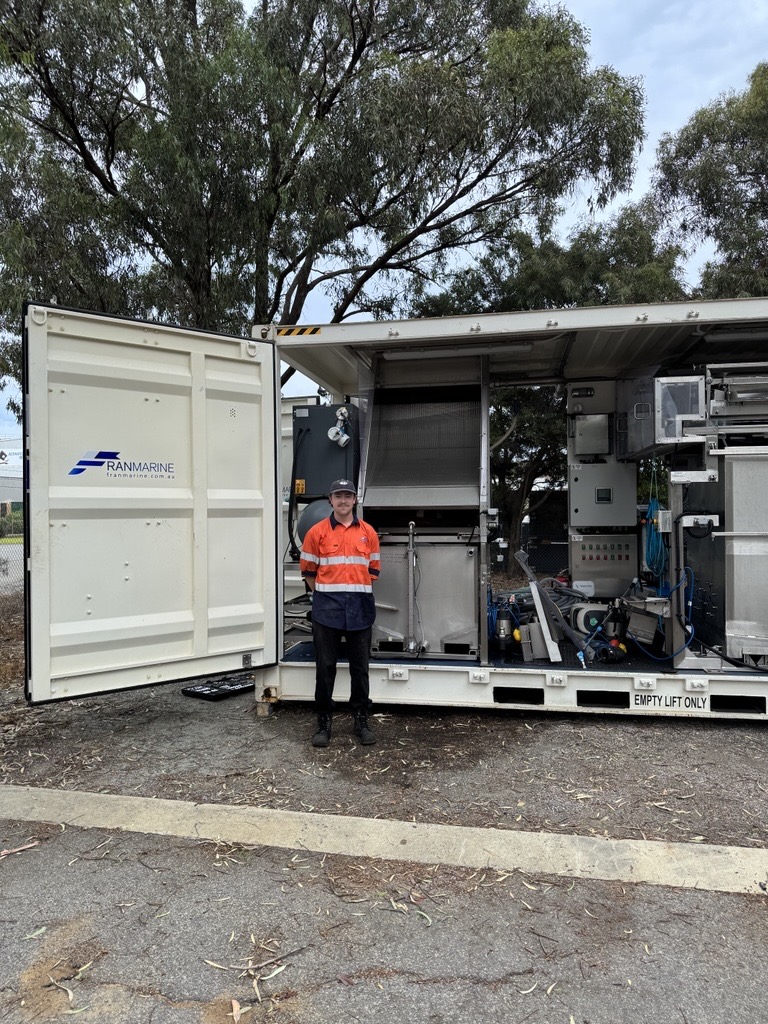
I started out working alongside commercial divers, project managers, technology specialists and engineers. My first area was the In-Water Hull Cleaning (IWHC) filtration units, and I ended up becoming the person people came to with filtration questions. That gave me something to own, which is worth a lot when you are new.
From there I got into the two areas I now spend most of my time on: ROV operations, and the asset management software the company builds. Both change what is possible in the water, and both make it easier to run maintenance properly rather than reactively.
Learning to fly an ROV
When the chance came to learn ROV operation, I took it, though I was nervous about it. Flying an underwater robot sounded like something you would need a long time to pick up.
Our ROV Manager ran the training, and that concern did not last. We covered setup, pack-down and the control interface. The controls turned out to be more intuitive than I expected: with a hand controller I was flying the vehicle within the session. Seeing the underwater world from the ROV's perspective is genuinely good fun.
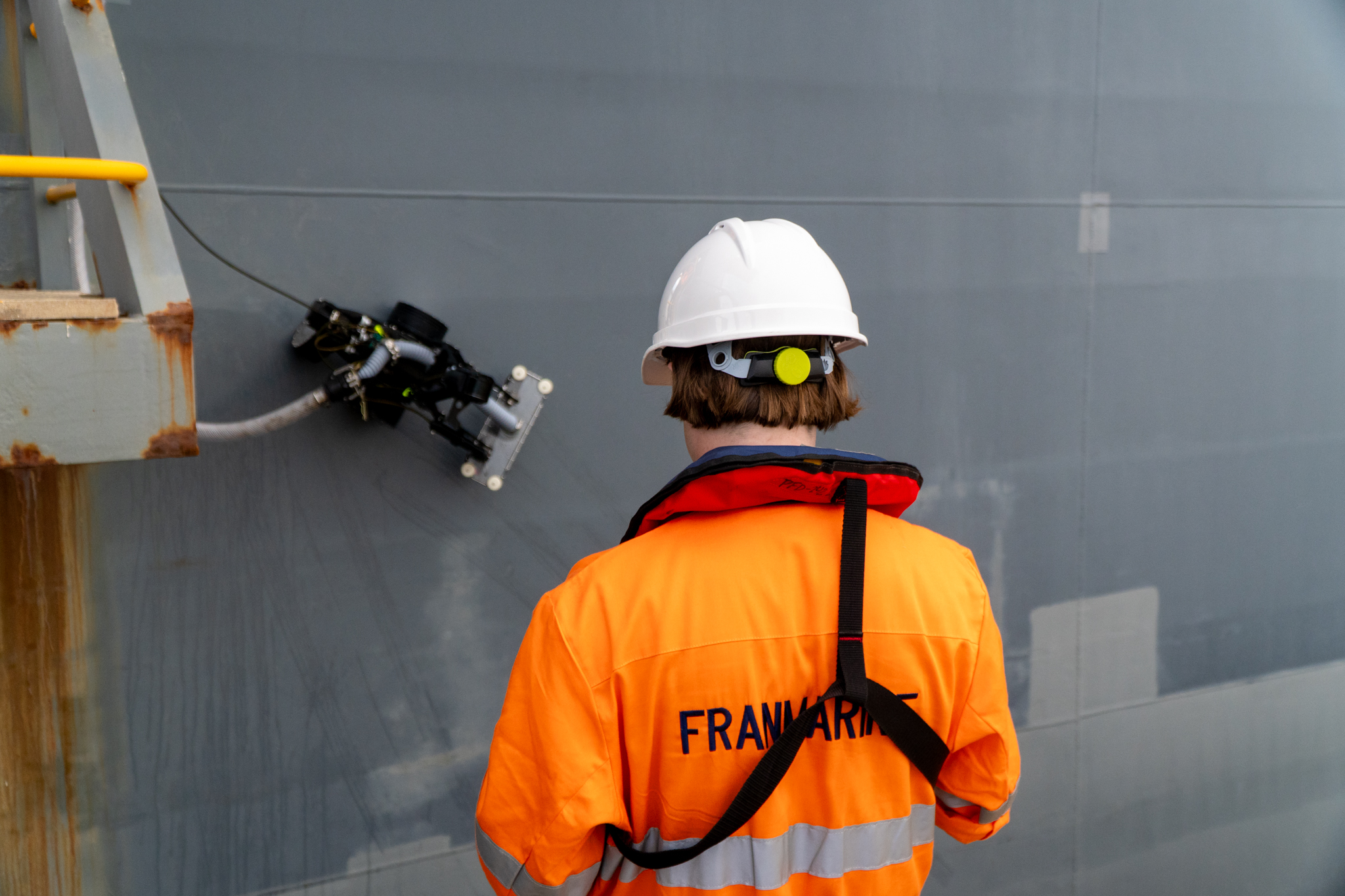 First hands-on training with the ROV crew.
Since then I have worked on mooring inspections, hull condition assessments and biofouling surveys, and helped the tech team maintain the vehicles. That last part is worth doing. These machines take a beating, and pulling one apart teaches you a lot about both how capable and how fragile they are.
Getting into the software
Around the same time I started using MarineStream, our asset management and reporting platform. There is a lot in it, but the structure made sense to me quickly, and before long I was using it to manage assets, log operations and put reports together across several projects.
The core of it is recording work as it happens. You capture quantitative data like temperature, depth and position, and qualitative observations like fouling level or hull damage, in the same place. The part that surprised me most was being able to talk to stakeholders and team members inside the job dashboard while the operation is still running.
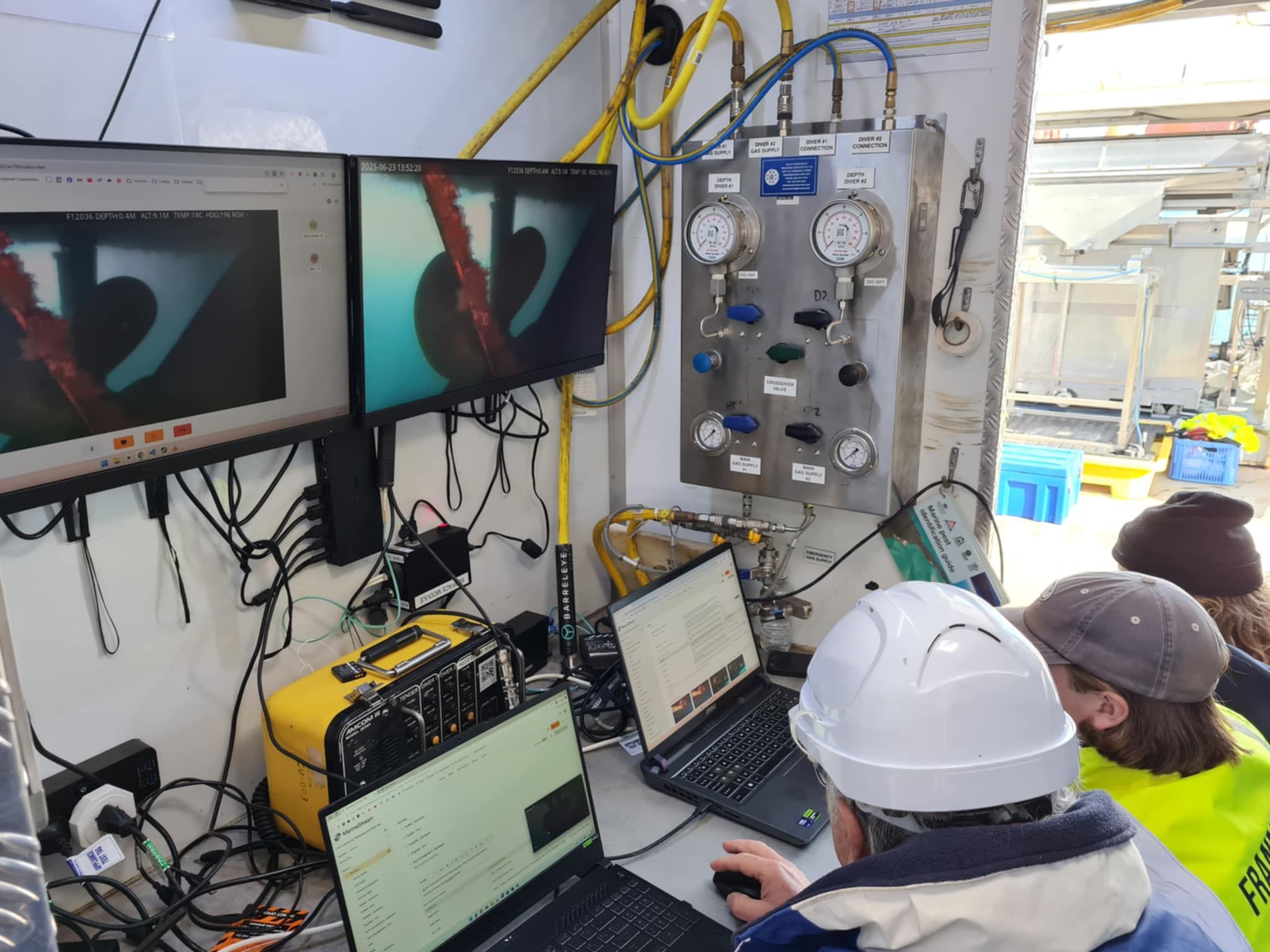 The platform during a hull inspection, capturing data as the job runs.
It also connects to the ROVs directly, so footage, notes and observations land on the record whether you are on site or not.
My first remote job
Which brings me to the thing I did not expect to be doing this year.
I was in my home office in Perth with a coffee when an email invite came through for a live job in Sydney: a biofouling inspection under the hull of a large vessel, with an ROV operator from our NSW team on site. One click and I was watching it happen.
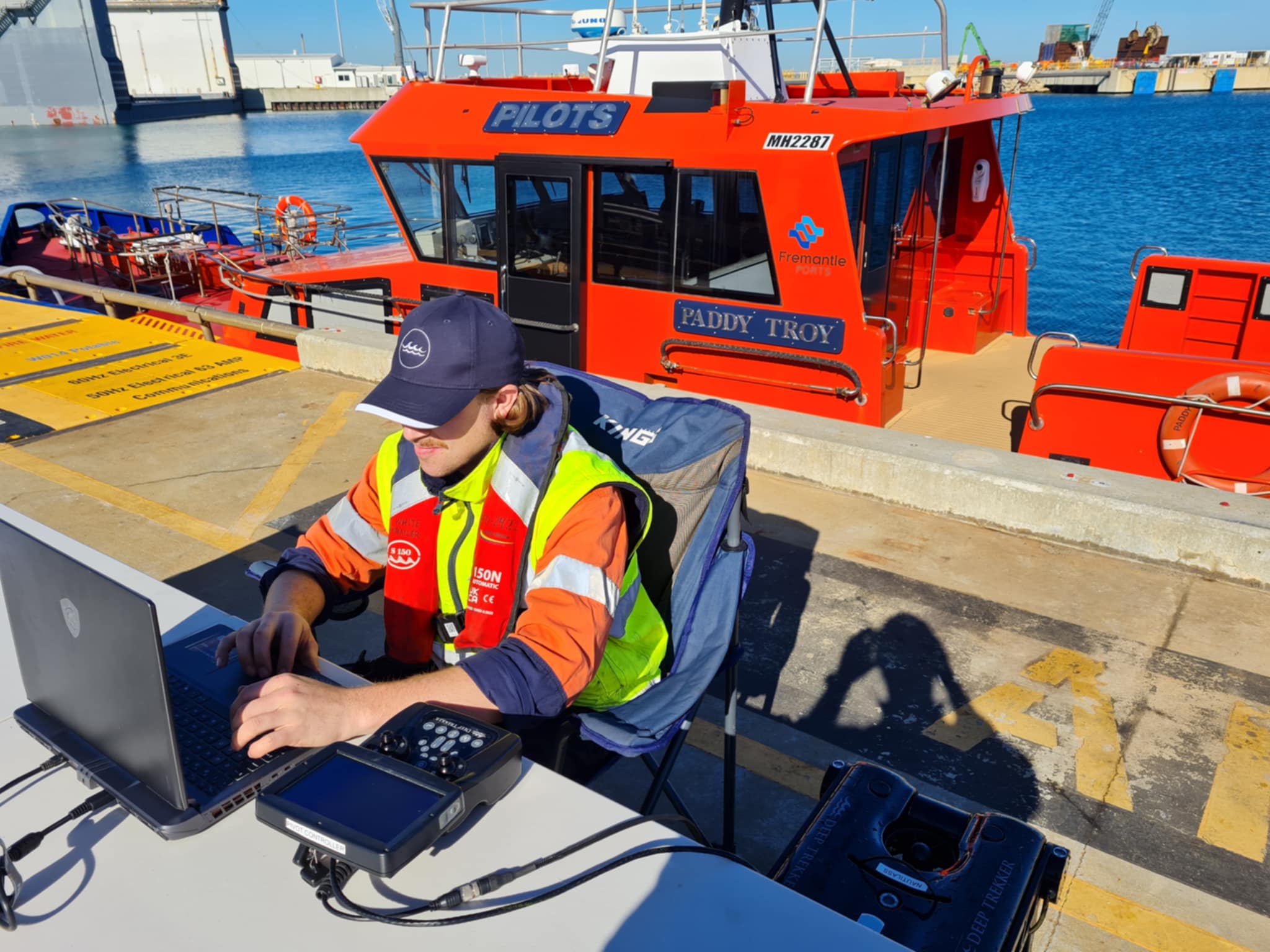 My setup during the remote job, connecting Perth to Sydney.
What got me was how much I could actually do. As the operator moved around the vessel, I followed along on the digital twin, took live screenshots of what the ROV was seeing, wrote condition notes, and discussed what we were looking at with him in real time. I was 3,000 kilometres away and it did not feel like it.
The job wrapped in just under three hours. We reviewed the data together, picked the images for the report and finalised the notes. The inspection report was generated on the spot, with timestamps, annotated photos and comments from two people on opposite sides of the country.
 Hull inspection data captured during the remote session.
I sat back from my desk a bit stunned. Being able to contribute properly to an inspection from another state says something about where this industry is heading.
Where I am now
Nine months ago I had no practical experience. Now I fly ROVs, run the filtration systems and work on remote inspections. I am aware that is a fast run, and I am aware how much of it came down to people here being willing to teach me.
What I take from it is that this industry is getting more capable and more accessible at the same time. Expertise no longer has to be in the same place as the job. That is good for the work, and good for anyone trying to get into it.
More from the news
The Preventive Advantage: Biofouling Management in a Warming Ocean
Warmer water is accelerating fouling and corrosion, which makes fixed maintenance intervals a bad bet.
Inspecting Hulls Without a Drydock: What the Fremantle Ports Trial Showed
A trial with Fremantle Ports and DPIRD: a full pre-clean hull inspection in 45 minutes, with nobody in the water.