
Clean Hulls, Clear Waters: The Case for Proactive Biofouling Management
15 January 2025 · MarineStream
Biofouling control sits at the point where two pressures meet: operators are being asked to run more efficiently, and to meet tighter environmental rules while doing it. It is easy to treat hull growth as a maintenance detail. It is not.
The IMO's 2023 Guidelines for Biofouling Management (MEPC.378(80)) changed the direction of travel. Combined with tighter port state controls and growing attention to invasive species, they point clearly towards mandatory global standards. Vessels trading internationally now need to be able to show a real biofouling management strategy, not just a document.
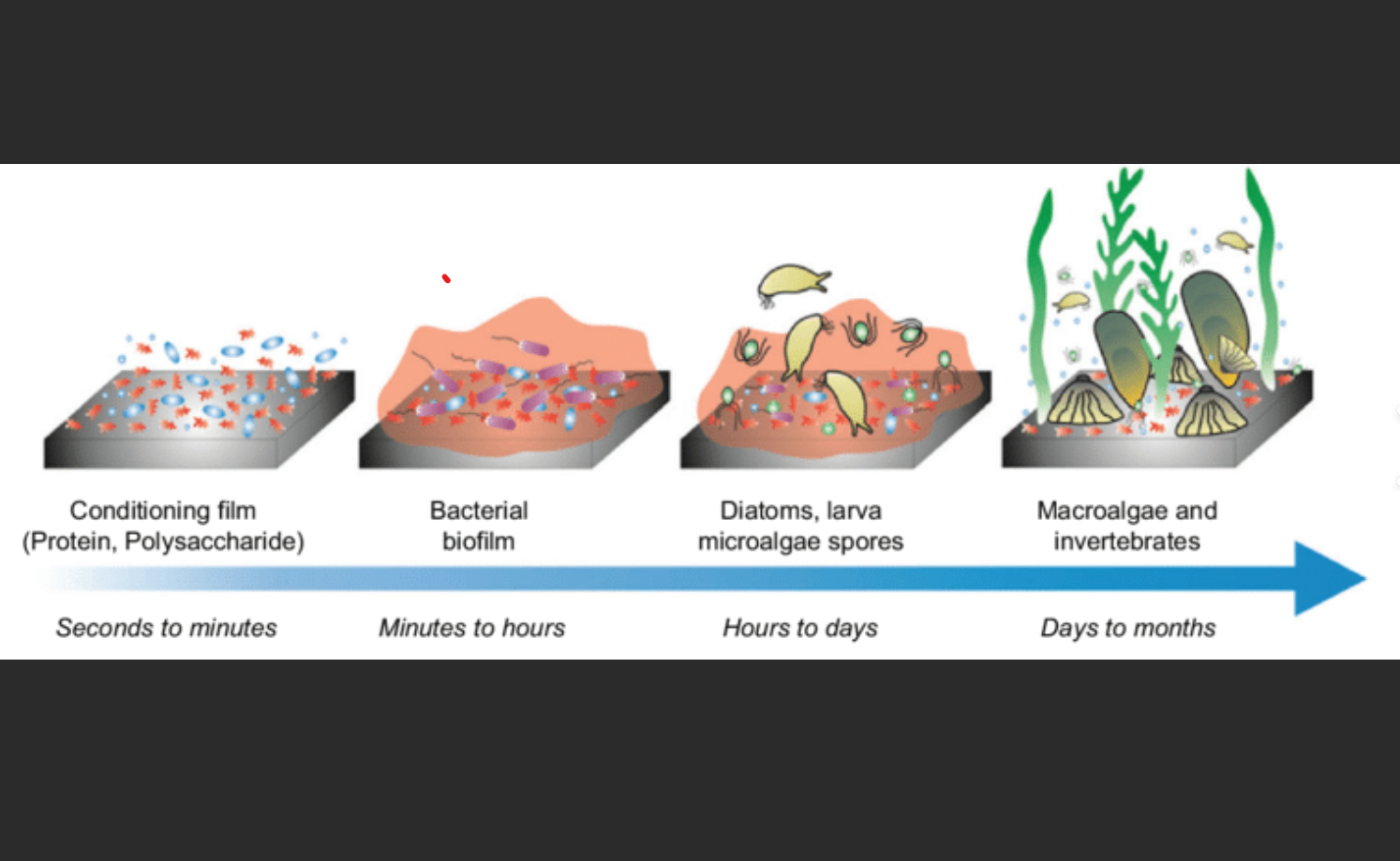 Progressive stages of marine growth on a vessel hull.
What fouling actually costs
Set the regulations aside for a moment; the commercial case stands on its own. A moderate layer of slime adds 5–20% to fuel consumption. Heavy calcareous growth can push the penalty past 40%. On a Panamax bulk carrier that is more than $500,000 a year in extra fuel at current prices, and it drags the vessel's Carbon Intensity Indicator (CII) rating down with it.
The knock-on effects matter too. Lost speed makes schedules unreliable, and performance monitoring on modern vessels consistently shows hull cleanliness mattering as much to a CII target as voyage planning or weather routing.
Where it shows up:
- Fuel: light slime 5–20%, heavy growth over 40%
- Speed: up to 10% loss in moderate cases
- Emissions: rise in step with fuel burn
- Environment: accumulation of depleted biocides on the hull
- Port access: a growing number of ports want to see a clean hull
- CII rating: direct impact
- Schedule reliability: depends on holding speed
The regulatory picture
Biofouling requirements are still national and regional, and the standards vary. MEPC.378(80) is the first serious move towards a common international framework, with technical standards for inspection, cleaning and documentation that individual jurisdictions can adopt and adapt. The notable shift is how much attention it gives to cleaning method and waste capture, rather than just to the state of the hull.
What modern requirements ask for is fairly consistent:
- A biofouling management plan specific to the vessel
- Cleaning and inspection records that are actually up to date
- Risk assessment protocols
- Contingency procedures
- Performance monitoring and documentation
- Waste capture and disposal protocols
- Periodic review of whether any of it is working
These sit alongside MARPOL Annex V and state pollution control regulations. In environmentally sensitive areas in particular, port authorities increasingly want evidence of proactive hull maintenance before they let you in.
What in-water cleaning looks like now
In-water hull cleaning used to be a brush and a diver. Current systems achieve 99% capture through 10-micron filtration, so removed material does not enter the water column.
That capture capability is not optional once you consider what comes off the hull. A larger vessel can accumulate several hundred kilograms of depleted cuprous oxide over an operational cycle. Releasing that into a harbour is a different problem from the fouling itself. Systems that hold 95% Species Protection Level (SPL) discharge water quality standards are compliant across multiple jurisdictions, which is what makes the work possible in ports that would otherwise prohibit it.
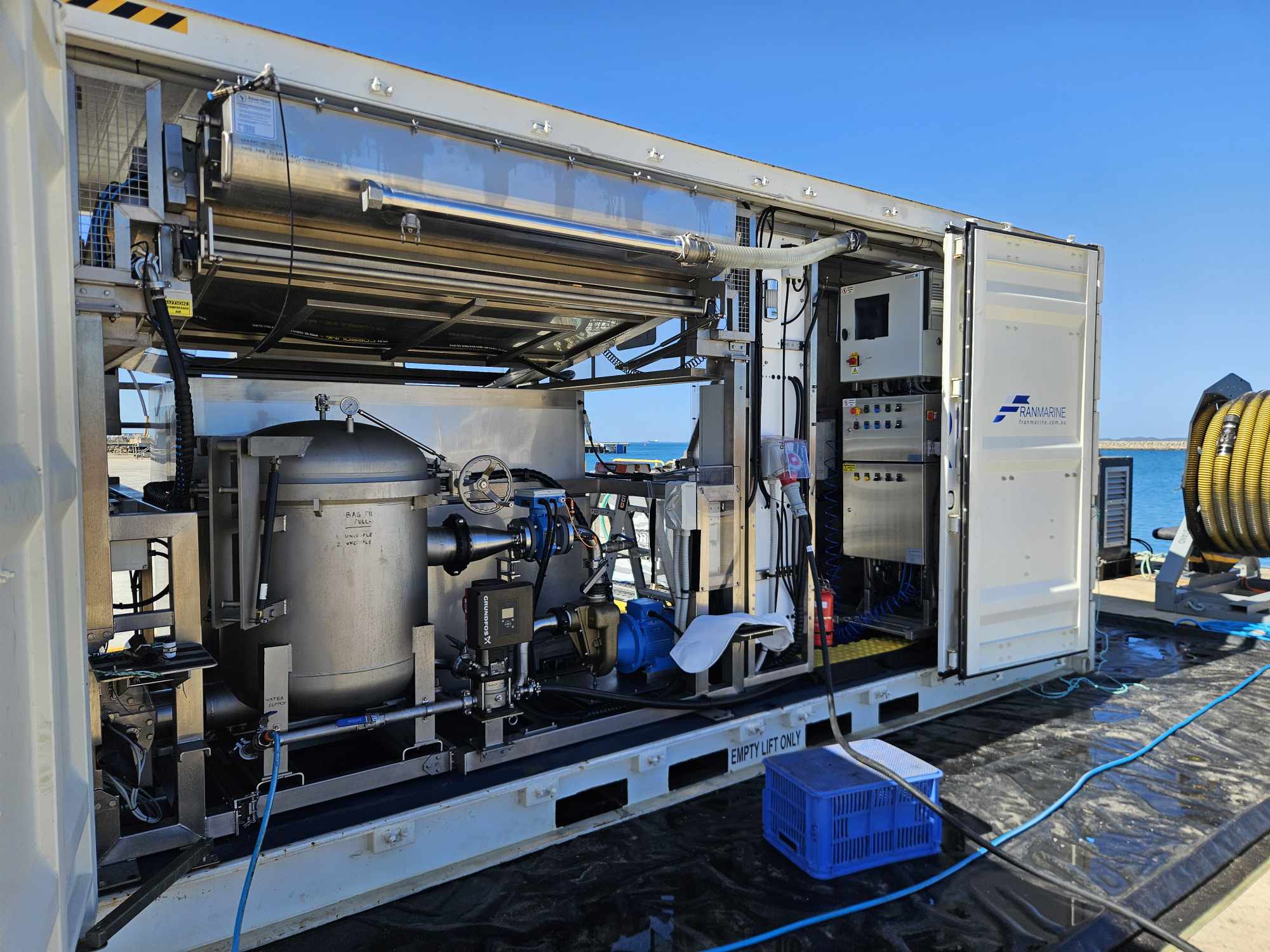 Filtration and capture equipment for in-water hull cleaning.
Current systems typically include:
- Real-time monitoring and documentation
- Multi-stage filtration
- Automated pressure adjustment
- Surface recognition
- Remote operation
- Digital inspection recording
- Waste collection and processing
The Royal Australian Navy and a number of commercial ports have adopted these standards. The reason is straightforward: managing biofouling needs both the ability to clean and the ability to track how fouling develops on a particular vessel, given its operating profile, where it trades and what antifouling system it carries.
Making it work in practice
Regular inspection, timely intervention and documentation you can produce on request. That is the whole method. What makes it hard is keeping inspection records, cleaning reports and compliance documents together and current, which is why it belongs on a digital platform rather than in a shared drive.
The variables worth thinking through before setting intervals:
- Operating profile and trading routes
- Local water conditions and seasonality
- Time spent in port
- Coating type and age
- Whether a cleaning system is available where you need it
- Local regulatory requirements
- What happens if an inspection finds more than expected
Digital records
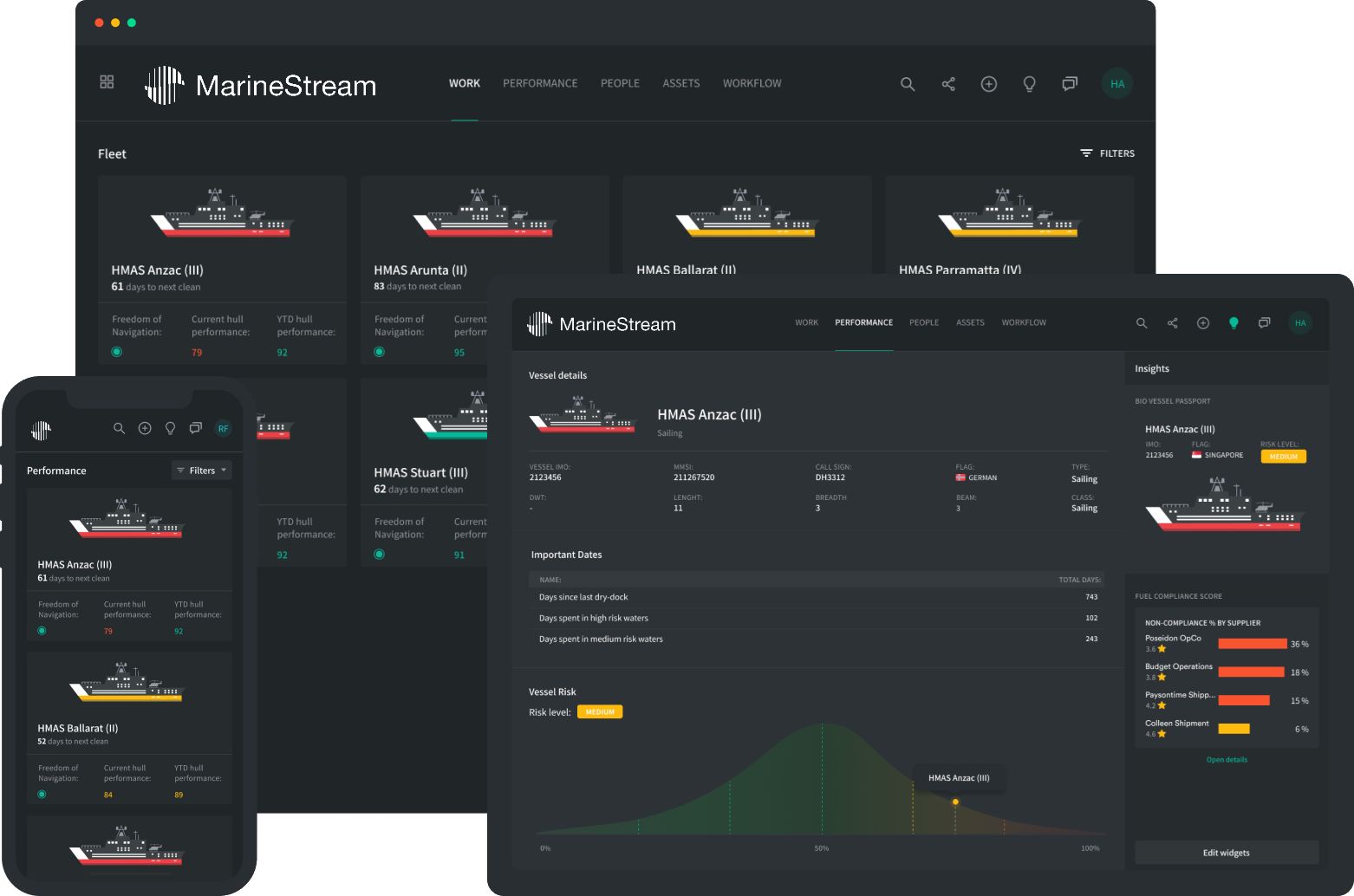 Vessel performance monitoring and fouling analytics on one platform.
Once the data is in one place, it starts earning its keep:
- Performance monitoring
- Fouling prediction
- Inspection scheduling
- Automated documentation
- Compliance tracking
- Cost-benefit analysis
- Environmental impact assessment
That is what lets you argue for a cleaning interval with numbers instead of instinct.
Where this leaves you
Regulations are tightening and scrutiny is increasing, so proactive biofouling management is becoming a condition of competitive operation rather than a nice-to-have. The good news is that the commercial and environmental cases point the same way: a clean hull burns less fuel, emits less, and gets into more ports.
Investing in it now is cheaper than being forced into it later.
About the author
Mathew Harvey is Biofouling Manager at Franmarine and CTO of MarineStream. He runs biofouling control strategy and the rollout of hull cleaning technology across both businesses, and is based in Western Australia.
For enquiries, contact Adam Falconer-West, CEO:
More from the news
From ROV Controls to a Remote Job in Sydney: Nine Months at MarineStream
Nine months from no practical experience to flying ROVs, running filtration systems and joining an inspection in Sydney from a desk in Perth.
The Preventive Advantage: Biofouling Management in a Warming Ocean
Warmer water is accelerating fouling and corrosion, which makes fixed maintenance intervals a bad bet.